
The thing about resistance
Honestly, when someone says they don't want a vibrator in bed, they're rarely saying no to the toy itself. They're saying no to something they think the toy represents. Maybe it's "you're not enough for me." Maybe it's "I don't know how this works and I'll feel weird." Maybe it's "my ex used toys and I hated it." The vibrator is just the stand-in for the real conversation you actually need to have.
I've worked with hundreds of couples where one partner suggested introducing a toy and the other shut down immediately. The difference between couples who moved forward together and couples who stayed stuck wasn't whether they bought a lemon clitoral vibrator or not. It was whether they took time to understand what was really going on underneath.
Why people resist toys (and what to do about it)
Resistance usually sits in one of four buckets. Knowing which one your partner's in changes how you talk about it.
The "I'm not enough" fear. This is the big one. Your partner worries that wanting a toy means you're dissatisfied, that introducing one is saying "sex with you isn't working." Here's the truth you need to communicate: a lemon vibrator doesn't replace them. It enhances what's already there. Just like having a good speaker system doesn't mean your partner can't sing, a vibrator doesn't mean penetration or manual stimulation stops. You're adding a tool, not replacing the person.
The "I don't understand it" discomfort. Some people grew up in environments where sex toys were shameful, or they've just never been exposed to them. A vibrator feels clinical or foreign. This one's easiest to address because curiosity is the antidote. Offer to show them the toy. Talk about how it works. Let them hold it, feel the vibration. The unknown part usually shrinks once it's no longer abstract.
The "I have a bad memory" trigger. Maybe an ex brought toys into the bedroom without asking, or they felt pressured. Maybe they tried a toy once and it felt uncomfortable or made them feel self-conscious. This deserves real acknowledgment. Don't minimize it. Say something like, "That sounds like it was a bad experience, and I get why you'd hesitate now. I want this to be different because I'm asking first, and we'll go at whatever pace feels right for you."
The "This is weird and I don't want to be weird" embarrassment. Sometimes it's just that introducing sex toys into a relationship that's been toy-free feels like crossing into unfamiliar territory, and that's genuinely uncomfortable. This needs permission to be awkward. You might say, "Yeah, this is going to feel a little weird at first. That's okay. Weirdness usually fades after the second time."
How to start the conversation
Timing and framing matter way more than the actual words.
Don't bring it up during sex or immediately after. Don't bring it up when you're frustrated or when things have been rocky. Have this conversation when you're both calm, clothed, and not in bed. It doesn't need to be formal, but it needs to be intentional.
Start with curiosity, not a pitch. Instead of "I want to buy a vibrator," try "I've been thinking about how we could make sex feel even better for you. Have you ever thought about trying something new?" That opens a conversation instead of putting them on the defensive.
If they're hesitant, ask questions. "What's making you nervous about it?" "What concerns come up when you think about it?" "What would need to be true for you to feel okay trying it?" Listen without arguing. Your job in this phase is understanding, not convincing.
Name what's probably happening underneath. If they seem worried about inadequacy, you might say, "I want to be clear that this isn't about you not being enough. You are. I'm thinking about this because I want us to explore more together." If they seem embarrassed, you might say, "I know this feels unusual. I want that too, but I also know that feeling unusual doesn't mean it's wrong."
The introduction that works
Once you've had the real conversation and your partner's agreed to try, the physical introduction matters.
Keep it low-stakes. You don't need to use it the first time you bring it out. Just have it present. "I picked this up. Want to see it?" Hold it, let them hold it, explain how it works. A lemon vibrator or other clitoral vibrator is pretty intuitive—there's no complex setup. The gentleness of something like the Lem, which uses suction rather than aggressive vibration, can actually feel less intense and more approachable than people expect.
When you do use it, start slowly. You might begin with just one of you using it solo, with the other person watching. Some partners find it incredibly hot to watch. Others find it weirdly vulnerable and need to build up to that. Both are fine. The point is you're moving at a pace that feels good.
If the first time feels awkward, say so. "That felt kind of weird, right?" Often, admitting the weirdness out loud actually makes it less weird. Second times are almost always easier.
What to do if they're still not comfortable
Sometimes, after a real conversation and a genuine attempt, your partner still isn't interested. At that point, you have a choice to make about what matters more: using a toy, or not creating relationship tension over it.
There's a massive difference between "my partner doesn't want toys and I've decided that's okay" and "my partner won't let me use toys." One is respect. The other is control. If you're in the second scenario, that's a bigger relationship issue than the toy itself.
But if you're genuinely incompatible on this one thing, there are paths forward. Some couples decide that solo use is fine, just not during partnered sex. Some set a timeline. "Let's revisit this in six months." Pressure almost never works. Trust and a partner who feels safe usually does.
Why the right toy matters when they do say yes
Not all vibrators are created equal, especially for someone who's new to toys and hesitant.
If your partner's worried about intensity, a suction-based toy like the Lem is actually gentler than it sounds. It doesn't require the same direct pressure as a traditional vibrator. It feels more like a massage than a shock. For partners who are anxious about sensation or worried it'll feel "too much," suction is often less intimidating.
If they're worried about noise, a quieter toy helps them relax. If they're worried about it being clinical or unsexy, something that looks thoughtfully designed rather than medical reduces that feeling.
The toy itself becomes a non-verbal signal that you've listened to their concerns. If they said "I don't want something huge," you brought something small. If they worried about it being uncomfortable, you chose something the reviews praise for gentleness. That attention matters.
The conversation doesn't end after the first time
Keep checking in. "How did that feel?" "Want to do that again?" "Is there anything you'd change next time?" This isn't you nagging them to like toys. It's you staying present and attentive, which is what actually builds desire and comfort over time.
Sometimes people warm up to something slowly. Your partner might feel awkward for the first three times and then, suddenly, something shifts and they're excited about it. That's normal. Stay patient.
What's most important is that introducing a lemon vibrator or any toy doesn't become a source of shame or pressure in your relationship. The goal isn't getting them to use a toy. The goal is keeping the conversation open, meeting them where they are, and moving forward together—whether that's with toys or without them.
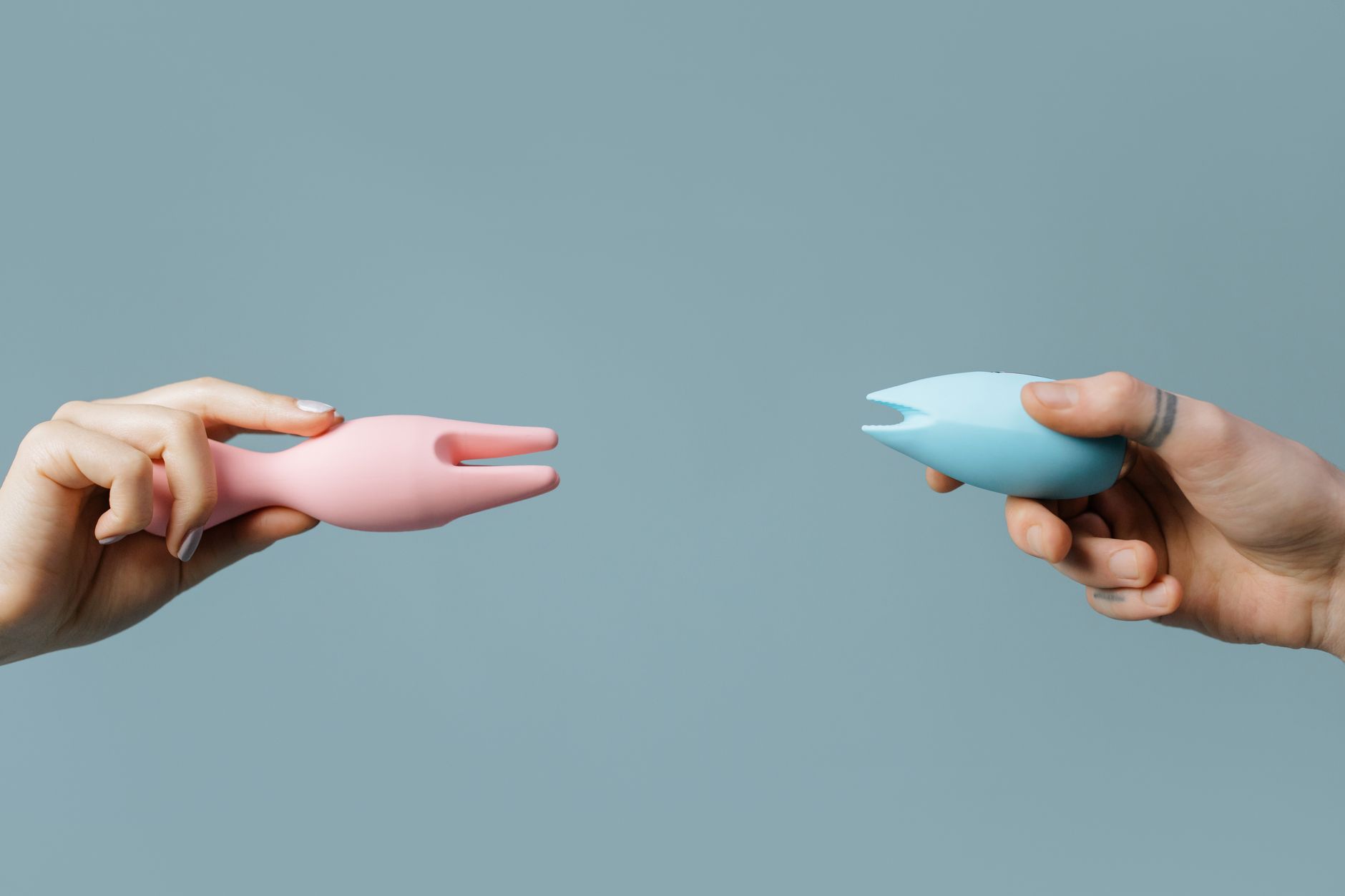
Photo by cottonbro studio on Pexels
People also ask
How do I tell my partner I want to use a vibrator without hurting their feelings?
Frame it as something you want to explore together, not something you need because they're not enough. Try: "I've been thinking about ways we can make sex feel even better for both of us. I'm curious about trying a vibrator together. How would you feel about that?" The key is making it a shared curiosity, not a solo request. If you're introducing a lemon clitoral vibrator specifically, you might mention that it's gentle and different from what they might expect. Lead with your excitement about the experience together, not your dissatisfaction with what you already have.
What if my partner thinks using a sex toy means I'm not satisfied with them?
This fear needs direct, compassionate acknowledgment. Sit down and say clearly: "I want you to know that this has nothing to do with you not being enough. You are enough. A vibrator isn't a replacement—it's an addition. It's like how you might enjoy a massage and also enjoy me touching you. Both can be true." Reassure them that you enjoy sex with them and that exploring together is about deepening what you already have, not undermining it. If the worry persists after the conversation, that might signal a deeper insecurity worth exploring together with a therapist.
Can introducing a vibrator actually improve our sex life?
Yes, but only if both partners are genuinely on board. For couples where hesitation disappears once they actually try it, vibrators often do help. They can reduce performance pressure, make orgasms more accessible, and introduce novelty that reignites desire. But forcing it or pushing a reluctant partner creates tension that does the opposite. Focus first on the conversation and connection, and the toy becomes a tool that enhances what's already there. If you're dealing with ongoing frustration about orgasms, that conversation might actually be where the real work begins.
Is it normal for partners to feel insecure about sex toys?
Completely normal. Insecurity about toys usually isn't about the object—it's about what the person fears it represents. For many, introducing toys feels like evidence that something's broken. That's rooted in how we're taught to think about sex: that good sex should happen without props, that needing tools means something's wrong with the person or the relationship. None of that's true, but it's a common source of resistance. Understanding that the insecurity is normal, not weird or unreasonable, helps you approach the conversation with more compassion.
What if my partner wants to use a vibrator but I'm uncomfortable with it?
The same principles apply in reverse. If you're the hesitant partner, tell your partner what you're actually worried about. Is it about feeling inadequate? Worried about pain or discomfort? Embarrassed about the noise or the act of using it? Once you name it, it becomes something you can actually address together instead of something that sits between you as an unspoken resentment. Many people who start out uncomfortable become comfortable once they understand what's happening and feel safe. Give yourself permission to build up to it. Extended foreplay and patience help a lot.
How do I introduce the topic if we've never talked about sex toys before?
Start smaller than you think you need to. You don't have to announce "I want to introduce vibrators into our sex life." You might start by asking general questions: "Have you ever thought about trying something new in bed?" "What would feel exciting to you?" Once you know their openness level, you can be more specific. Some couples do better with written communication—a text or note can feel less confrontational. Others prefer talking during a walk or car ride when you're not making direct eye contact. Find the format that feels most natural and safe for your relationship.
The bottom line
Introducing a sex toy, especially something like a lemon vibrator, when your partner's hesitant isn't about the object itself. It's about trust, communication, and making sure both of you feel safe and respected. The conversation is what matters. The toy is just the visible thing. If you can have an honest conversation about what's really going on—the fears, the assumptions, the desires—the toy becomes easy. And if you can't have that conversation, the toy won't fix what's actually broken.
Start with curiosity. Listen without defending. Move slowly. And remember that your partner's hesitation isn't rejection—it's usually just them needing to understand what this means before they're ready to try it. Once they do, things often shift pretty quickly.