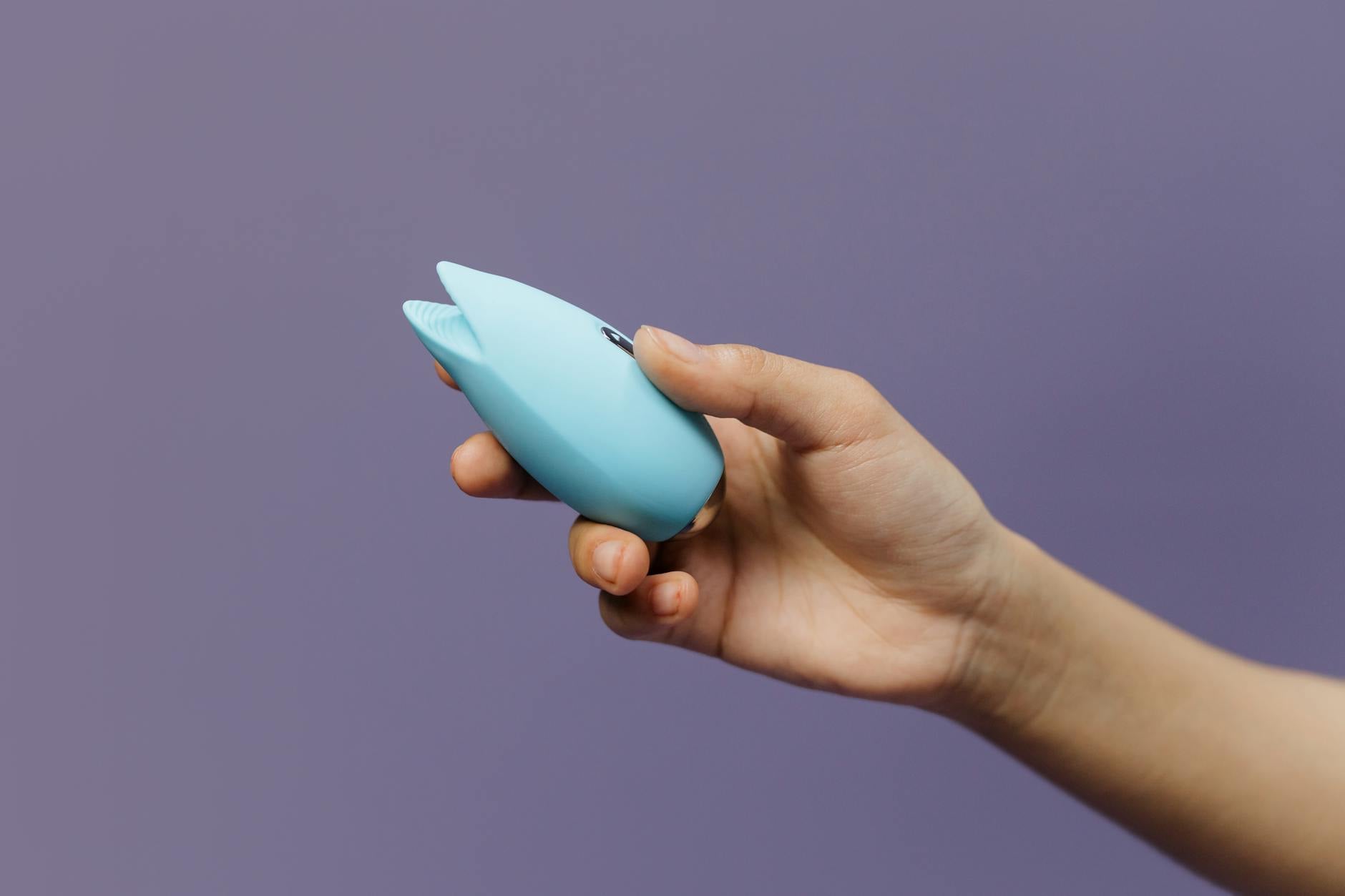
Here's what nobody tells you about restarting sex after illness
Long illness does something specific to intimacy. It's not just that your body feels different. It's that sex gets removed from your life so completely, for so long, that when you're finally well enough to want it again, it feels like learning something new. Your desire might be back before your body feels ready. Or vice versa. Or you're caught between them, unsure which part to trust.
That's not a problem. That's just where you are right now.
Using a lemon clitoral vibrator when you're returning to pleasure after illness is different than using one at full health. Your nervous system is recalibrating. Your tissues might be deconditioned. Your confidence in your body might be shot. A lemon vibrator, because of how it works, is actually one of the gentlest ways to wake sensation back up without triggering pain or overwhelming yourself.
Why a lemon vibrator is ideal for this specific transition
A lemon sucker like the Lem works through gentle air-pulse technology rather than direct vibration. That matters when you're returning to pleasure because it creates consistent, predictable stimulation that doesn't require your body to be "ready" in the traditional sense.
Direct vibrators rely on friction and pressure. If your tissues are sensitive from illness or deconditioning, friction can feel raw or oversensitive. Air-pulse clitoral vibrators, by contrast, create a sensation more like gentle suction. It's a different neural pathway entirely. Many people find it easier to control the intensity and easier to stop without discomfort.
Second, a lemon vibrator's pulse patterns are measurable and repeatable. When you're rebuilding trust in your body, knowing exactly what intensity level 2 feels like each time matters more than you'd expect. There's no guessing. No "will it hurt today." Just consistency.
Third, the learning curve is shallow. You don't need to experiment with angles, pressure, or complicated choreography. Turn it on, hold it, let your body respond. That simplicity is exactly what you need when energy and confidence are already low.
Start with intention, not momentum
The biggest mistake people make when returning to sex after illness is treating it like they need to "get back to normal" immediately. Normal will come back. Right now, normal isn't the goal.
Before you even pick up a lemon vibrator, get clear on what you actually want from this. Not what you think you should want. Not what your partner expects. What you actually want.
Do you want to rebuild solo pleasure first, alone with your body, before involving anyone else? Do you want your partner present but not involved? Do you want their help? There's no right answer, but knowing your answer changes everything about how you approach this.
Next, pick a time when you're genuinely rested. Not "rested enough." Actually rested. Illness has depleted your nervous system. Using a lemon vibrator when you're already fatigued can feel discouraging because pleasure itself requires energy. You don't need hours. You need genuine rest.
Dim the lights. Make sure you won't be interrupted. If this feels embarrassing or clinical, that's fine. Name it. "This feels clinical and that's okay. I'm rebuilding." Then proceed.
The actual process: slow, sensate, no pressure
Start with your Lem on the lowest setting. If it's the first day back, you might not turn it on at all. You might just hold it, feel the weight of it in your hand, let your body remember what a tool for pleasure feels like.
That is not wasting time. That is exactly the right pace.
When you do turn it on, use pattern 1. Hold it against your inner thigh first, not directly on your clitoris. Your thigh has more tissue, less nerve density, so it's the easiest place to reintroduce sensation. Spend two to three minutes there. Notice what you feel. Notice what you don't feel. Both pieces of information are useful.
Move the lemon vibrator toward your vulva gradually. You're not trying to build arousal. You're trying to rebuild the sensation map of your own body. That's a completely different goal.
When you do make contact with your clitoris, keep it brief the first time. Thirty seconds to one minute. This isn't about finishing. It's about reacquainting yourself with what stimulation feels like after illness.
Stop before you feel frustrated. This is the counterintuitive part. If you were healthy and building toward orgasm, you'd push through resistance. Right now, you're not. You're rebuilding resilience. Stopping while you still feel interested, rather than pushing until you finish, teaches your nervous system that pleasure is available and safe.
Healing happens between sessions
You might use your lemon vibrator three times before you feel anything close to arousal. You might feel arousal immediately and then nothing the next day. Both are normal. Illness has disrupted your nervous system's baseline. Pleasure is one of the first things to go in illness and often the last thing to truly return.
Keep a soft expectation, not a rigid plan. "I'll explore this three times a week" is better than "I'll use this every day." You're gathering data about your body's readiness, not training for a marathon.
If pain appears at any point, stop immediately and don't retry for at least a week. Pain is different from discomfort or awkwardness. Pain is your body saying no. Listen to it.
If numbness is your issue, meaning you can feel the lemon vibrator but it doesn't create much sensation, that's separate from pain and often resolves with repeated, gentle, consistent use. Your nervous system can be desensitized by illness and needs to be reawakened slowly. A lemon clitoral vibrator's specific frequency can help. Keep going, but without pushing.
If you have a partner, here's how to involve them
Most people don't want to explain every detail to a partner. "I'm using this tool to rebuild sensation" is often enough. You don't need to describe your nervous system's state of affairs.
If they ask to be involved, here's the frame that helps. They're not trying to make you orgasm. They're here as a supportive presence. Their job is to sit with you, maybe hold your hand, and make it clear they're not timing you or expecting an outcome. Outcome-free presence is wildly helpful when you're vulnerable.
If they want to use the lemon vibrator on you, that's a separate decision made separately. Many people find it easier to rebuild sensation alone first, where there's zero performance pressure. You can always invite your partner in later.
When to know you're ready to move forward
There's no finish line here. But there are signs that your body is genuinely recalibrating. You might notice arousal building more naturally. You might find yourself wanting to use your lemon vibrator more often, not because you're forcing it but because it actually feels good. Sensation might get sharper. Numbness might start lifting.
These changes often come suddenly, after a few weeks of slow, consistent, gentle practice. Your nervous system recalibrates faster than you'd expect once it realizes pleasure is safe again.
That's when you might experiment with higher intensity levels on your lem vibrator, or longer sessions, or involving a partner. But the foundation stays the same. Slow. Consistent. No pressure.
Your body isn't broken because illness disrupted your pleasure. It's just recalibrating. A lemon vibrator is exactly the right tool for that work.
People also ask
How long does it take to rebuild sensation after long illness?
It depends on the illness and your individual nervous system, but most people report noticeable changes within two to four weeks of gentle, consistent practice. Some notice improvements within days. Others need eight to twelve weeks. The timeline isn't linear. You might feel progress, then feel stuck, then suddenly shift forward again. The key is consistency without pressure. Using a lemon clitoral vibrator three times a week, even briefly, usually creates faster progress than sporadic longer sessions.
Is it normal to feel nothing when using a lemon vibrator after illness?
Completely normal. Illness can numb sensation temporarily, especially if you've been sedentary or heavily medicated. Numbness isn't permanent. It's your nervous system in recovery mode. Keep using your lemon vibrator at low settings. The gentle stimulation helps rewake the neural pathways for pleasure. Some people feel something immediately. Others don't feel much for a few weeks, then sensation floods back. Patience here is active, not passive. You're genuinely working by using the vibrator consistently.
Can I hurt myself by using a lemon vibrator too soon after illness?
Pain signals you're moving too fast. Discomfort or awkwardness is normal. Pain is not. If you feel pain, stop and wait at least a week before retrying. If pain continues, that might signal an underlying medical issue worth discussing with your doctor. Otherwise, a lemon vibrator is one of the gentlest ways to rebuild sensation. The air-pulse technology doesn't create the aggressive friction that traditional vibrators do, which makes injury unlikely if you're listening to your body.
Should my partner be involved when I'm restarting sex after illness?
That's entirely your choice, and it might change day to day. Some people find that rebuilding sensation alone first removes performance pressure and helps them reconnect with their own pleasure. Others want their partner's presence and support from the beginning. There's no right way. What matters is that you choose based on what actually feels supportive to you, not what you think you should want. Communicate your preference clearly and give yourself permission to change your mind.
Can I use a lemon vibrator while taking medication that affects sensation?
Yes. In fact, many people use lemon clitoral vibrators precisely because medications have dulled sensation. The consistent, gentle air-pulse stimulation can help counteract numbness over time. That said, if medication is significantly affecting your sensation and you're concerned, it's worth asking your doctor if a dosage adjustment is possible or if there's an alternative medication that affects pleasure less. A lemon vibrator is a tool to rebuild sensation alongside that conversation, not a replacement for it.
What if arousal feels scary after long illness?
That's worth naming and exploring gently. Sometimes after illness, arousal feels unfamiliar or unsafe because your body has been in survival mode. Using your lemon vibrator at very low settings, in short bursts, with complete control in your hands, can help. You're teaching your nervous system that arousal is safe. If fear persists, talking with a therapist who specializes in somatic work (body-based healing) can help. Pleasure after illness isn't automatic. Sometimes it needs gentle permission.
Sources and further reading
The information in this article draws from clinical research on nervous system recovery after prolonged illness, trauma-informed approaches to sexual wellness, and the specific physiology of air-pulse clitoral stimulation. If you're navigating a complex recovery, working with a sex therapist or somatic practitioner can provide personalized guidance tailored to your specific situation. Your pleasure matters. Take your time reclaiming it.
For personalized support with your recovery journey or specific questions about how a lemon vibrator might fit your needs, reach out to our team. We're here to help.