Let's start with the real conversation
You want pleasure. But somewhere in your body, there's a quiet voice saying: "What if it hurts?" That voice isn't broken. It's not overactive. It's protecting you based on past experience, and that's actually wise.
The gap between wanting sensation and fearing pain stops a lot of people from exploring toys at all. They assume that vibrators are intense by default, that using one means tolerating discomfort, or that their body simply isn't built for this. None of those things are true. A lemon vibrator, especially one designed with suction rather than raw vibration, can feel genuinely good while staying well below your pain threshold. The trick is understanding why pain happens in the first place, and then building a framework that keeps you safe while you explore.
Why pain shows up during clitoral stimulation
Pain during pleasure isn't random. It usually arrives from one of a few predictable places.
Oversensitivity from direct pressure. The clitoris has roughly 8,000 nerve endings concentrated in a tiny area. Direct, high-intensity vibration on that spot can actually feel like too much instead of good. This is especially true if you have vulvodynia, high baseline sensitivity, or if you're using a toy that vibrates at frequencies that don't match your nervous system. A lemon clitoral vibrator uses air-pulse suction instead of traditional vibration, which distributes pressure more evenly and feels wildly different from a standard vibrator.
Tension in the pelvic floor. When we're anxious about pain, we unconsciously clench. The pelvic floor tightens, which makes stimulation feel sharper and less pleasant. Ironically, the fear of pain creates the conditions that make pain more likely.
Tissue inflammation or microtrauma from friction. If you're using a toy with vigorous friction and no lubrication, the tissue gets irritated. After a few minutes it starts to hurt. This one's easy to fix: lubrication and gentler pressure.
Psychological guardedness. Your brain is running a threat assessment in the background. Even if your body is physically capable of pleasure, if your mind is scanning for danger, sensation reads as sharp instead of satisfying.
How the suction mechanism on a lemon vibrator changes everything
Here's what makes a lemon clitoral vibrator different from most toys you've probably encountered. Instead of a motor vibrating at a fixed frequency, it uses gentle suction and release. Think of it less like a buzzing sensation and more like a soft mouth. The stimulation feels broader, warmer, and far less likely to trigger pain responses.
This matters hugely if you're pain-anxious because suction distributes the intensity across a wider area of tissue rather than concentrating all the force on one point. You get deep clitoral engagement without the sharp, almost aggressive sensation of traditional vibration. Most people describe it as feeling more natural, more like partnered pleasure than like a toy.
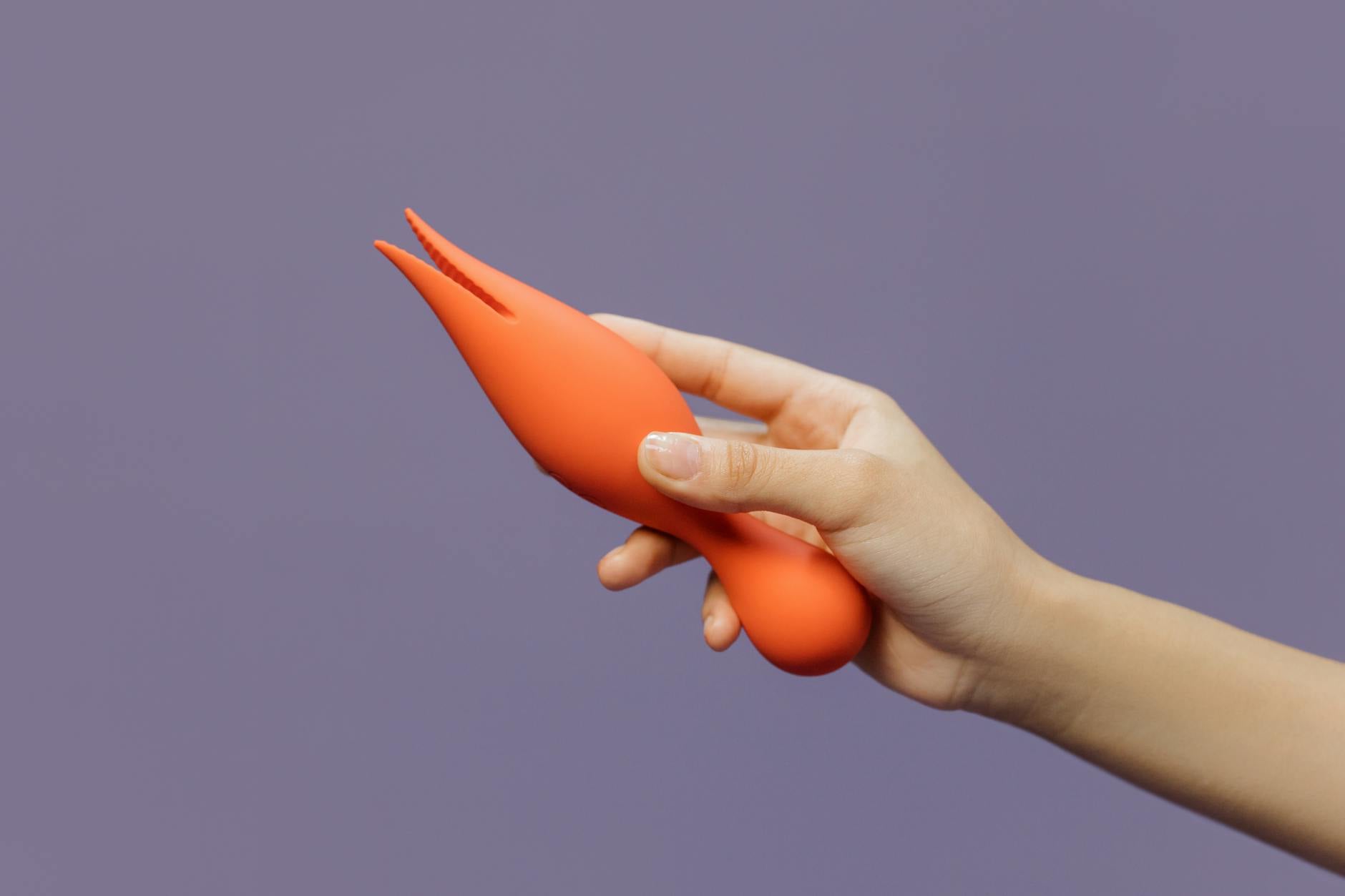
Photo by cottonbro studio on Pexels
If you're worried that "less intense" means "less effective," that's not how it works. The suction mechanism on a lemon adult toy actually reaches deeper layers of clitoral tissue that traditional vibrators miss. People often report stronger, more full-body orgasms, not weaker ones.
Building a pain-free framework: the step-by-step approach
Using a lemon vibrator when pain is a concern means slowing down. This isn't a limitation. It's actually the fastest way to build real confidence and reliable pleasure.
Start with lubrication, always. Water-based lube is your baseline. It reduces friction, makes everything feel smoother, and takes the sharp edge off direct pressure. Apply generously around the external clitoris and vulva before you even turn the toy on. More lube than feels necessary is the right amount.
Turn the device on at the lowest setting before touching the clitoris. Let yourself hear the sound and feel the vibration in the air first. This preps your nervous system. You're not sprinting toward sensation. You're introducing yourself to it gradually.
Rest the toy against the outer labia first, not directly on the clitoris. The external labia have fewer nerve endings and feel less intense. Spend 30 seconds here. Notice how it feels. Let your body adjust. If this feels fine, move closer.
Approach the clitoris from the side or from above, not directly. The clitoral head is the most sensitive part. Coming at it indirectly, through the hood or from the side, means you get stimulation without overwhelming pressure. Most people find this more pleasurable anyway.
Stay at the lowest intensity setting for at least five minutes. This isn't about "toughing it out." It's about letting your nervous system recognize that this sensation is safe. After five minutes at level 1, move to level 2 if you want to. Or stay where you are. There's no rule that says you have to climb the intensity ladder.
Pay attention to the quality of the sensation, not the quantity. Pain usually feels sharp, stabbing, or burning. Pleasure that's intense still feels warm, resonant, building. If you hit a sensation that feels wrong, back off immediately. Your body's feedback is more reliable than any instruction.
Managing pelvic floor tension while using a lemon sucker
Your pelvic floor is probably holding more tension than you realize, especially if you've had painful experiences with sex before.
Before you use a lemon clitoral vibrator, spend two minutes doing the opposite of what you'd expect. Instead of kegels, focus on relaxing. Lie down, place a hand on your lower belly, and breathe into that space. On the exhale, consciously soften your pelvic floor. It should feel like a gentle release, not a squeeze. If you can't feel the difference, that's okay. You're building awareness.
While you're using the toy, check in with this tension every 30 seconds or so. Most people don't realize they're clenching until someone points it out. You're your own pointer-outer here. Notice when your pelvic floor tightens up. Breathe. Release it. This single habit transforms the experience from potentially painful to genuinely pleasurable.
When to pause, and what that means
If stimulation starts to hurt, stop. Not because something is wrong with you, but because pain is information. It's telling you that something in this moment isn't working. That's useful data.
Pause and ask: Is it the intensity level? Try turning it down. Is it the position? Shift the angle. Is it the lubrication? Add more. Is it pelvic floor tension? Breathe and release. Is it just too much for today? That's completely valid. Pleasure exists on a spectrum. Some days you want deep sensation. Some days you want gentle touch. Both are real.
When to check in with a healthcare provider
If pain persists even with lubrication, gentleness, and all these strategies, or if pain is sharp and localized, talk to a gynecologist or pelvic floor physical therapist. Conditions like vulvodynia, vaginismus, or endometriosis need professional support. A lemon vibrator can still be part of your pleasure practice, but with guidance tailored to your specific situation.
You're not broken. Pain during pleasure is more common than anyone talks about. And it's almost always addressable.
The pleasure paradox
Here's what I see in my practice consistently: people who start using toys with the intention of "being careful" and "not pushing too hard" often find that gentleness actually unlocks deeper pleasure than they expected. Rushing toward intensity usually backfires. Moving slowly, paying attention, and trusting your body to tell you what it needs works almost every time.
A lemon vibrator is designed for this exact approach. The suction mechanism, the range of intensity levels, the ergonomic shape. all of it supports gradual, attentive exploration. You get to discover what feels good without the pressure to perform or push through discomfort.
FAQs
How do I know if the pain I'm feeling is normal versus a sign something is wrong?
Normal pleasure can feel intense without feeling painful. If you're experiencing sharp, burning, or stabbing sensations, something needs to change. Dull aching, pressure, or intense tingling that feels good rather than alarming is usually fine. The key test: does it feel like something your body is enjoying, or like something you're tolerating? If it's the latter, adjust.
Can I use a lemon vibrator if I've had painful sex before?
Absolutely. In fact, many people with a history of painful sex find that using a toy solo, on their own timeline, with complete control over intensity, actually helps them rebuild confidence. You're not replicating the painful experience. You're creating a completely different one under conditions you control.
What if the lowest setting on a lemon clitoral vibrator is still too intense?
You can rest the toy against your skin without turning it on and just hold it there, getting used to the weight and shape. You can also use it over clothing initially. And you can turn it on, use it on other parts of your body first (inner thighs, lower belly), and work your way toward the clitoris. There's no timeline.
Does lubrication reduce sensation, or does it keep it the same?
Lubrication doesn't reduce sensation. It changes it. Without lube, you get more friction and potentially more sharp sensation. With lube, sensation becomes smoother and warmer. Most people find that good lube actually enhances sensation because it removes the distraction of discomfort.
If I'm in pain partway through using a lemon sucker, how do I know if I should push through or stop?
Stop. Always. Pushing through teaches your nervous system that pain during pleasure is normal and expected. It reinforces anxiety. Stopping and regrouping teaches your nervous system that you're safe and in control. That's the framework you want.
Can anxiety about pain actually create pain, even if there's nothing physically wrong?
Completely. Your nervous system is primed for threat detection. If you approach a toy expecting it to hurt, your body braces itself. That bracing creates tension, which makes sensation sharper. Breaking this cycle means going slowly enough that your nervous system relaxes. That usually takes longer than you'd expect, and it's always worth it.
You deserve sensation without sacrifice
Pleasure and safety aren't opposing forces. They work together. The slowest approach is often the fastest path to real, reliable sensation. A lemon vibrator designed with suction technology and intuitive intensity controls gives you exactly what you need to explore without compromise.
If you're ready to start, our guide to using a lemon vibrator for solo pleasure walks you through the first session step by step. Or if you're navigating this with a partner, we have strategies for introducing a lemon vibrator when there's resistance.
Your body knows what it needs. Listening to it is the whole point.